 info@thecatalystsgroup.com


 GET IN TOUCH
Enhancing Fermentation Performance in a
Grain-Based Ethanol Plant
A leading grain-based ethanol production facility aimed to improve fermentation efficiency, increase alcohol production, and achieve greater process consistency while maintaining low residual sugar and starch levels. To support these objectives, The Catalysts Group implemented a fermentation optimization program featuring Alcozyme G Pro, supported by on-site technical supervision, process monitoring, and operational optimization over a 30-day trial period. The program focused on maximizing starch utilization, enhancing fermentation performance, and delivering consistent results under existing plant operating conditions.
Plant Profile
| Parameter | Details |
|---|---|
| Plant Capacity | 120 KLPD |
| Industry | Grain-Based Ethanol Production |
| Feedstock | 100% Maize |
| Fermentation Process | Grain-Based Fermentation |
| Configuration | 1 Pre-Fermenter & 3 Fermenters |
| Fermenter Working Volume | 750–790 m³ |
| Pre-Fermenter Working Volume | 120 m³ |
| Starch Content | 62.5% |
| Trial Duration | 30 Days |
| Product Evaluated | Alcozyme G Pro |
The Challenge
The plant was looking to improve overall fermentation performance while maintaining stable production conditions.
The key challenges included:
- Improving alcohol concentration in the fermented wash.
- Achieving consistent fermentation performance across all fermenters.
- Maintaining low residual sugar and residual starch levels.
- Optimizing starch conversion for improved ethanol productivity.
- Identifying opportunities for further process optimization through enzyme application.
- Delivering consistent process performance without disrupting the existing fermentation cycle.

The Catalysts Solution
To optimize the fermentation process, The Catalysts Group implemented a technical optimization program centered around Alcozyme G Pro, a specialized enzyme solution designed to improve starch hydrolysis, support efficient fermentation, and enhance alcohol productivity.
The implementation included:
- Detailed process assessment prior to the trial.
- Process optimization begins from the pre-fermenter stage.
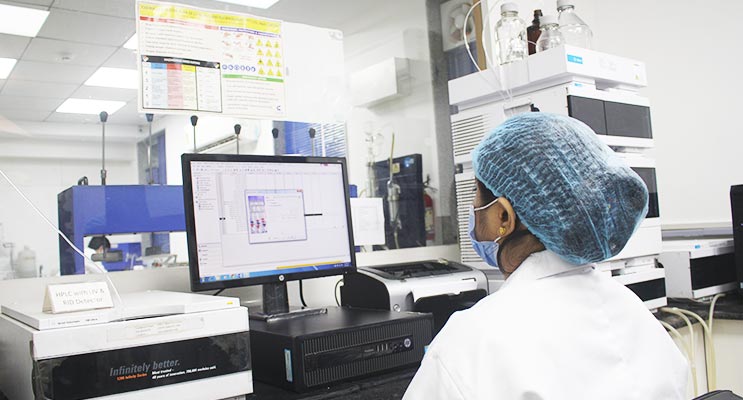
- Continuous monitoring of fermentation parameters by The Catalysts Group’s technical team.
- Regular evaluation of process performance to maximize fermentation efficiency and consistency throughout the trial.
Performance Highlights
| Parameter | Performance Achieved |
|---|---|
| Plant Capacity | 120 KLPD |
| Trial Duration | 30 Days |
| Average Alcohol (Last 10 Fermenters) | 13.71% v/v |
| Peak Alcohol Achieved | 13.79% v/v |
| Residual Sugar | 0.21–0.27% |
| Residual Starch | 1.71–1.85% |
| Fermentation Consistency | Improved |
| Process Stability | Maintained Throughout the Trial |
Before & After Optimization
| Parameter | Before Optimization | After Optimization |
|---|---|---|
| Alcohol in Wash | Variable fermentation performance | Average 13.71% v/v (Last 10 Fermenters) |
| Peak Alcohol | Lower than optimized trial performance | 13.79% v/v |
| Residual Sugar | Higher and less consistent | 0.21–0.27% |
| Residual Starch | Variable starch conversion | 1.71–1.85% |
| Fermentation Performance | Scope for improved consistency | Stable and consistent performance throughout the 30-day trial |
| Process Optimization | Standard operating conditions | Continuous technical monitoring and process optimization by The Catalysts Group |
| Enzyme Performance | Scope for improved starch conversion | HPLC analysis confirmed remaining sugars were primarily DP3 & DP4 (non-fermentable sugars), indicating effective fermentation and potential for further enzyme optimization |
Key Outcomes
- Achieved a consistent average alcohol concentration of 13.71% v/v during the final ten fermenters of the trial.
- Recorded a peak alcohol concentration of 13.79% v/v, demonstrating enhanced fermentation efficiency.
- Maintained low residual sugar levels (0.21–0.27%), indicating efficient sugar utilization.
- Achieved stable residual starch values (1.71–1.85%), reflecting effective starch hydrolysis throughout the fermentation process.
- Delivered consistent fermentation performance across all fermenters during the 30- day evaluation period.
- HPLC analysis confirmed that the remaining sugars were primarily DP3 and DP4 fractions, which are non-fermentable sugars, indicating that fermentation performance had been effectively optimized and that further improvements could be achieved through enzyme optimization.
- Based on the successful trial results, The Catalysts Group recommended the continuous use of Alcozyme G Pro to maintain process consistency and support long-term improvements in fermentation performance.
Conclusion
The fermentation optimization program implemented by The Catalysts Group using Alcozyme G Pro successfully enhanced fermentation performance in a grain-based ethanol production process. The trial consistently delivered higher alcohol production, efficient sugar
utilization, stable starch conversion, and reliable process performance while maintaining normal plant operating conditions.
Supported by continuous technical supervision and process optimization, the solution demonstrated its ability to improve fermentation consistency and overall plant efficiency. The successful trial validated Alcozyme G Pro as an effective solution for maximizing ethanol
productivity and supporting sustainable improvements in grain-based fermentation processes.