
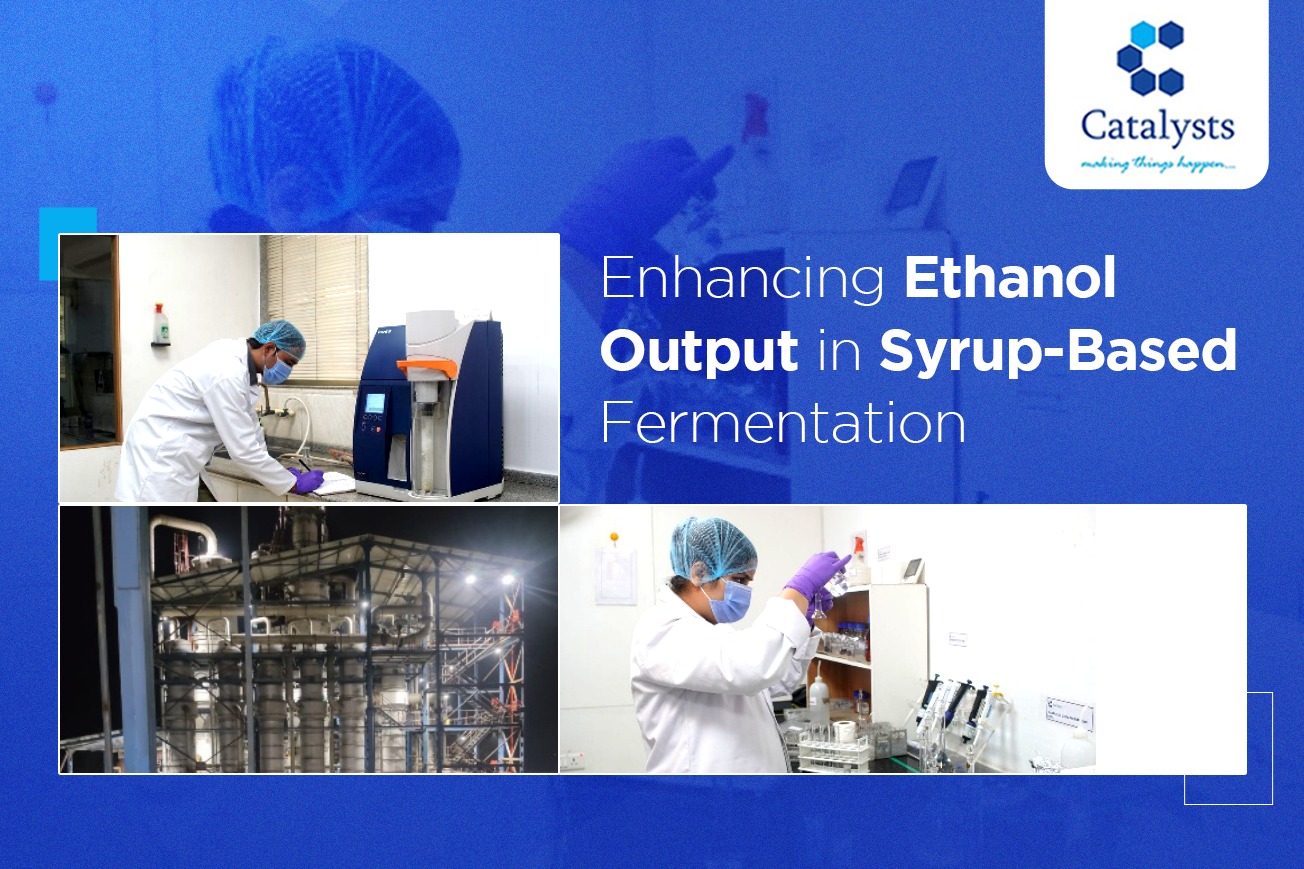
In the evolving landscape of bioethanol production, syrup-based fermentation presents both a promising opportunity and a formidable challenge. Compared to molasses or grain-based systems, syrup—especially defecated cane syrup—offers higher fermentable sugar content and lower non-fermentable. However, it is also prone to wide fluctuations in total reducing sugars (TRS), inconsistent microbial loads, and difficult in handling and storage due to viscosity and contamination risks as a result of which may distillation units encountered issues while diverting syrup for ethanol production.
Studies were undertaken in a newly commissioned 225 KLPD ethanol unit established with the objective of leveraging syrup as its primary feedstock. During the initial months of operation, the unit faced several technical bottlenecks. From unstable fermentations and inconsistent yields to infrastructure gaps and untrained staff, the setup needed deep technical handholding.
To address these gaps holistically in a newly commissioned 225 KLPD ethanol unit, authors framed a high-level process strategy that aligned with modern syrup fermentation science and industrial best practices. From fermentation kinetics to utility system design, the team from Catalyst Biotechnologies Pvt. Ltd. played a guiding role in transforming conceptual potential into operational performance. It was not just for optimizing fermentation but also guiding utility planning, automating dosing systems, and empowering plant staff through training and SOP deployment. The results were transformative.
Understanding the Initial Challenges
Despite the high potential of syrup as a substrate, the plant struggled to achieve consistent alcohol yields. The total reducing sugar levels averaged around 40%, with a syrup factor of 0.50, With a syrup load of approximately 380–390 m³ per batch and a fermenter volume of about 880–890 m³, the fermentation output reached only ~12.01%, which was significantly below the expected potential. Apart from various other reasons discussed herein, one of the major reason was inconsistent syrup feeding, as there were no weighing systems in place.
Additionally, the absence of dedicated acid tanks with dosing system meant that sulphuric acid was being poured manually by operators, leading to safety hazards and uncontrolled pH conditions. The air pipeline installation was incomplete, resulting in insufficient aeration of the pre-fermenters and fermenters, which further weakened yeast activity. Steam delivery was equally problematic. Poorly designed steam lines failed to provide uniform temperatures across vessels, leading to incomplete sterilization and erratic fermentation starts.
Although the plant staff had a general understanding of operations, syrup-based fermentation presented new variables and complexities to them. What was needed, a structured set of procedures, training, and monitoring tools tailored to syrup's specific challenges to ensure consistency and predictable outcomes.
Technical Strategy and Intervention
A multifaceted technical approach aimed at optimising every stage of fermentation was implemented. Central to the strategy was the application of a tailored suite of enzymes and nutrients designed specifically for syrup fermentation.
Product | Dosage Used | Function |
Enzysyrup Max | 5 PPM | Hydrolysis of complex sugars |
Bactoferm | 1 PPM | Suppression of lactic acid bacteria |
DSPN PRO | 15–25 PPM | Yeast micronutrient for vitality |
Bactoshield | 5 PPM | Bacterial contamination prevention |
Active Dry Yeast | 50–60 PPM | Robust yeast propagation and performance |
Each of these components played a distinct role in improving the over efficiency of the system. Enzysyrup Max ensured efficient hydrolysis of complex sugars, even in the high-viscosity syrup environment. DSPN PRO provided essential micronutrients that enhanced yeast budding, viability, and tolerance. Bactoferm and Bactoshield kept bacterial contamination in check, reducing the impact of volatile acids.
The yeast activation process was overhauled entirely. A structured pre-fermenter (PF) protocol was introduced to rehydrate yeast in a controlled environment, with aeration at 1.5–2.0 vvm and pH adjusted to 4.3 using acid tanks (newly installed). Setup gravity was targeted at 1.030 for optimal fermentation start.
SOP Implementation and Training
Recognizing the inexperience of the plant operators with syrup-based systems, authors drafted and implemented detailed Standard Operating Procedures (SOPs) for all critical operations—yeast rehydration, fermenter sanitization, enzyme dosing, syrup feeding, and batch monitoring.
Each SOP included parameters, control points, and safety guidelines. For instance, the fermenter SOP outlined a 22-hour syrup feeding window, with syrup introduced in three distinct phases to control osmotolerance and yeast adaptation. The enzyme and nutrient dosing were mapped phase-wise:
Syrup Stage | Enzysyrup Max | DSPN | Bactoferm | Bactoshield |
At Setup (0 hr) | 1 kg | 3 kg | 100 gm | 4.0 L |
During Syrup Flow | 3 kg | 9 kg | 400 gm | NA |
Total per Batch | 4.0 kg | 12 kg | 500 gm | 4.0 L |
Along with documentation, practical training sessions were also organized. Operators were taught to track gravity drops every two hours, assess yeast cell viability, and identify contamination symptoms. This was a critical shift toward process ownership by the plant team.
Infrastructure Upgradation & 4-T Approach
Beyond biochemical optimisation, the team worked to upgrade infrastructure that directly impacted fermentation performance. Steam lines were redesigned to ensure equal heat distribution across fermenters. Air pipeline setups were corrected, and air flow was recalibrate to provide uniform aeration—a key requirement in high TRS syrup fermentation.
Manual enzyme and acid dosing were replaced with automated systems, ensuring accuracy and eliminating variability. Industrial weighing machines were installed across syrup intake zones to bring precision to batch preparation. Such changes not only improved consistency but also reduced the physical workload on operators, allowing them to focus on monitoring and quality checks.
Recognising the challenges of syrup variability, the authors advocated for a steady feed batch approach to ensure a continuous and consistent supply of fermentable sugars. This was crucial for improving yeast osmotolerance, stabilising metabolic activity, and minimising residual sugars—especially in syrup-based systems prone to feedstock fluctuations. To ensure process hygiene and operational stability, we also highlighted the implementation of the 4T Clean-in-Place (CIP) principle—Time, Temperature, Turbulence, and Titration—as a foundation for effective cleaning, sterilization, and contamination control.
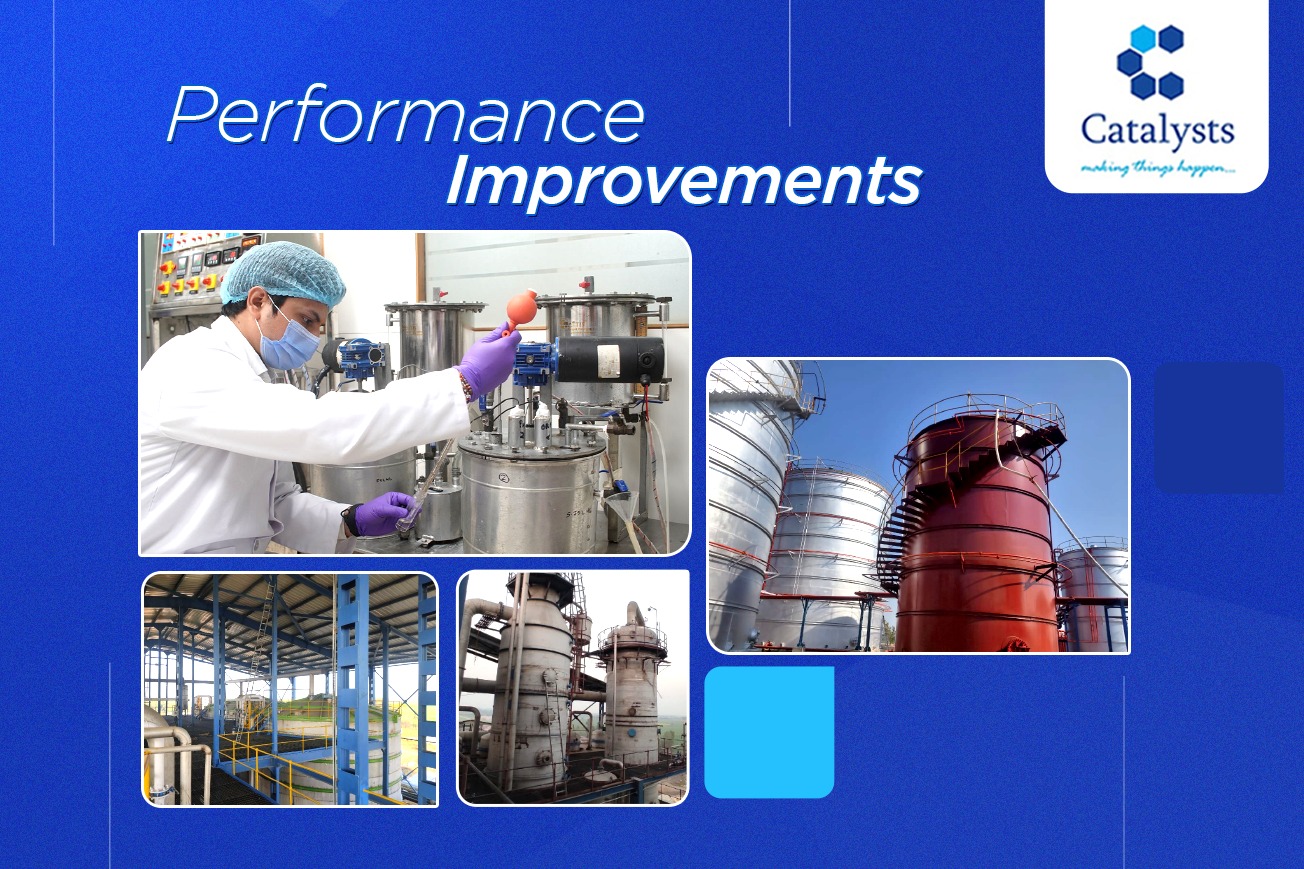
The unit could achieve the following measurable improvements:
- Fermentation efficiency then consistently averaged 92.55%, with residual sugars as low as 0.22%, reflecting near-complete sugar conversion. The process sustained an average alcohol concentration of 12.84% v/v, with the syrup factor ranging between 0.48 & 0.49, indicating strong yeast vitality, balanced nutrition, and minimal process losses.[Cu2]
- The total average fermentation cycle time was optimised to approx. 46 hours as per availability of syrup, including filling (30 hours avg.) and reaction (15.30 hours avg.)—enabling faster batch turnaround, improved fermenter availability, and enhanced operational efficiency compared to earlier, longer cycles.
- A stable setup gravity of 1.020, along with a well-controlled syrup load of ~360–370 m³ per batch and a fermenter volume of ~940–950 m³, ensured consistency across runs. [Cu3] Inputs i.e. various enzymes as mentioned above accurately dosed to support yeast health, suppress lactic acid bacteria, and maximize sugar utilization.
- The performance enhancements translated into tangible economic benefits. Compared to pre-optimization levels (average alcohol yield of ~12.01% v/v), the optimized process consistently achieved an average alcohol concentration of 12.84% v/v, marking a gain of 0.83% per batch. [Cu4]
- The intervention not only stabilized production but also delivered microbial robustness, improved predictability, and enhanced plant operability—translating directly into lower steam consumption and greater operational efficiency during distillation.
Conclusion
This stands out as a clear demonstration of how holistic support—spanning enzymes, SOPs, automation, infrastructure design, and operator training—can transform the performance of a syrup-based ethanol plant. From unpredictable, manually operated systems to a streamlined, data-driven process, the plant made measurable gains in alcohol output, sugar efficiency cost control, and staff capability.
Recent Posts
Enzytreat Advance - Creating a Stable Foundation for High-Performance
Discover Enzytreat Advance, your solution for building a stable foundation that enhances high-performance. Unlock your potential today!
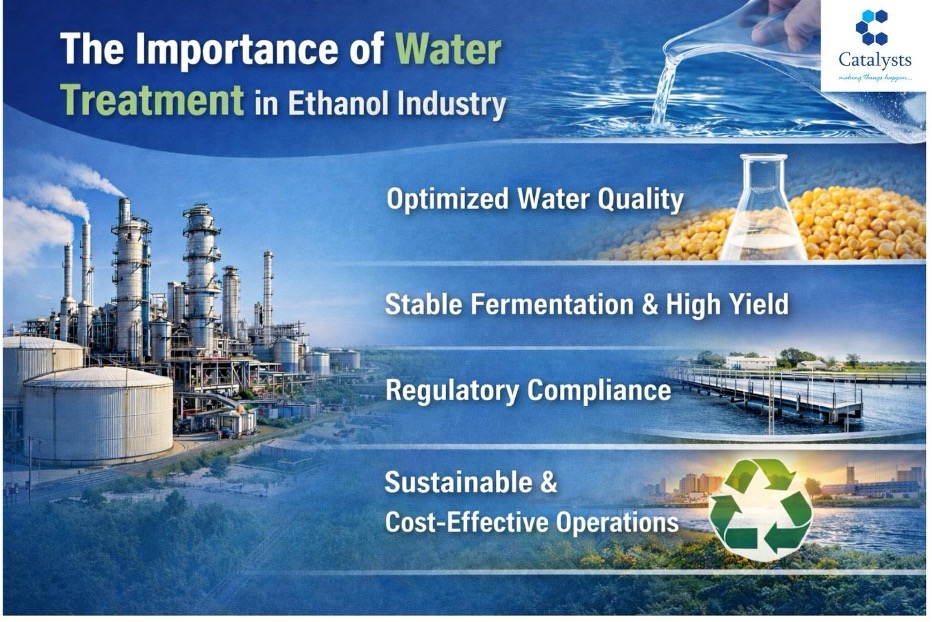
Importance of Water Treatment in the Ethanol Industry
Discover the critical role of water treatment in the ethanol industry, ensuring sustainability, efficiency, and compliance with environmental standards.
Distillers Corn Oil Recovery: Unlocking Hidden Value in India’s Corn-Based Ethanol: 2026 Perspective
Uncover the benefits of distillers corn oil recovery in India's ethanol production. Enhance profitability and sustainability in the corn industry with our insights.
Catalysts Connect
Keep up to date with our latest news and analysis by subscribing to our regular magazine and newsletter
Post a comment
Your email address will not be published.