
The worldwide quest for renewable energy and sustainable resources has reshaped agriculture and manufacturing. Bioethanol stands as a pillar in this shift, with production from corn in the United States and sugarcane in Brazil and Asia surging over three decades—from niche to mainstream renewable fuel. This growth stems from government mandates, environmental regulations, and demand for cleaner energy. As ethanol plants expand into biorefineries, profitability narrows under pressures from feedstock costs, energy expenses, and fuel standards. Optimizing every process stage is essential, exemplified by the commercial extraction of Distiller’s Corn Oil (DCO) from thin stillage in dry-grind facilities. Once a minor component of distiller's grains, DCO now fetches value as biodiesel feedstock and for industrial chemicals, embodying circular bioeconomy ideals: maximal resource use, minimal waste, and new revenue streams (Mohammadi Shad et al., 2021).
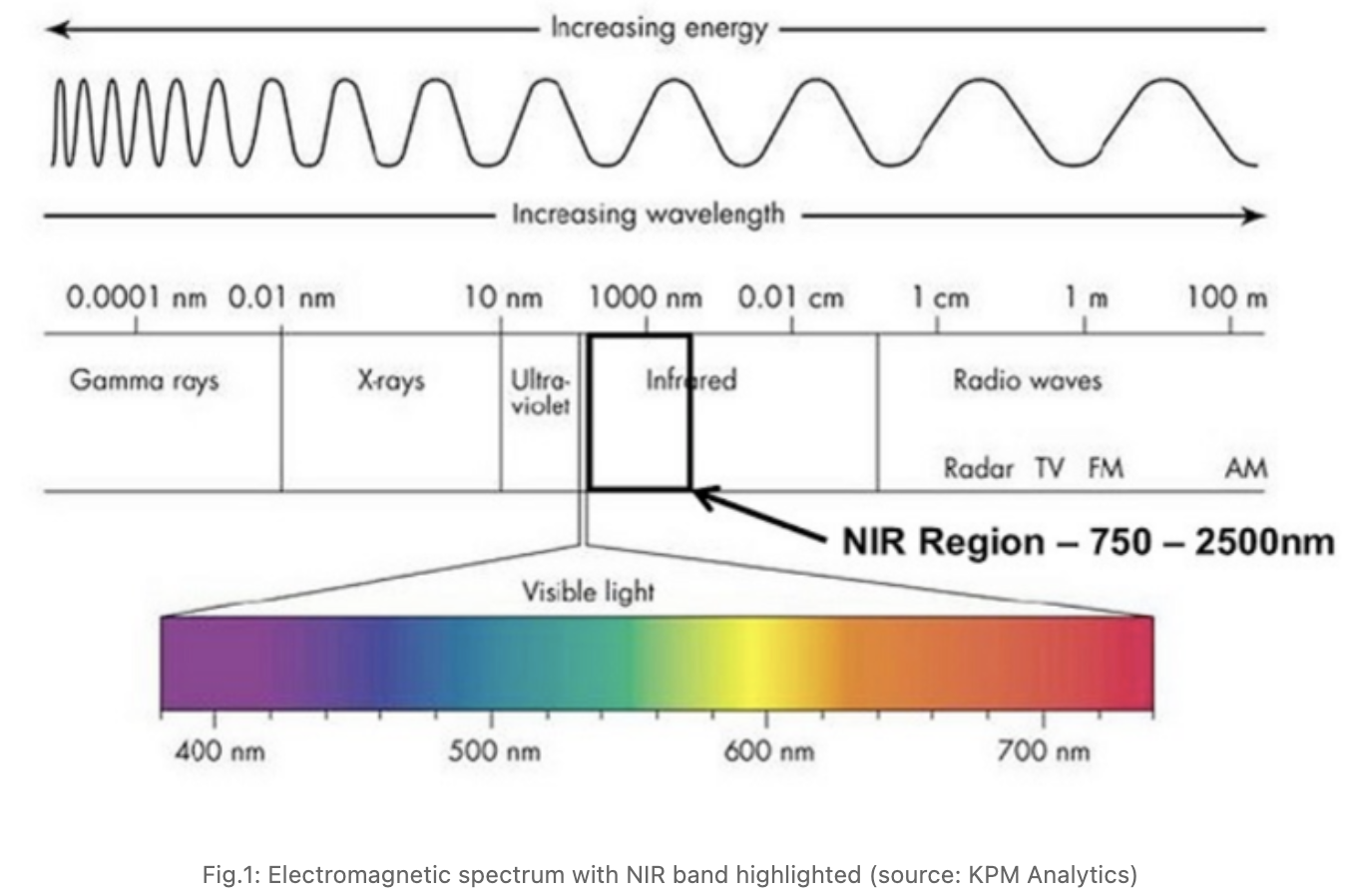
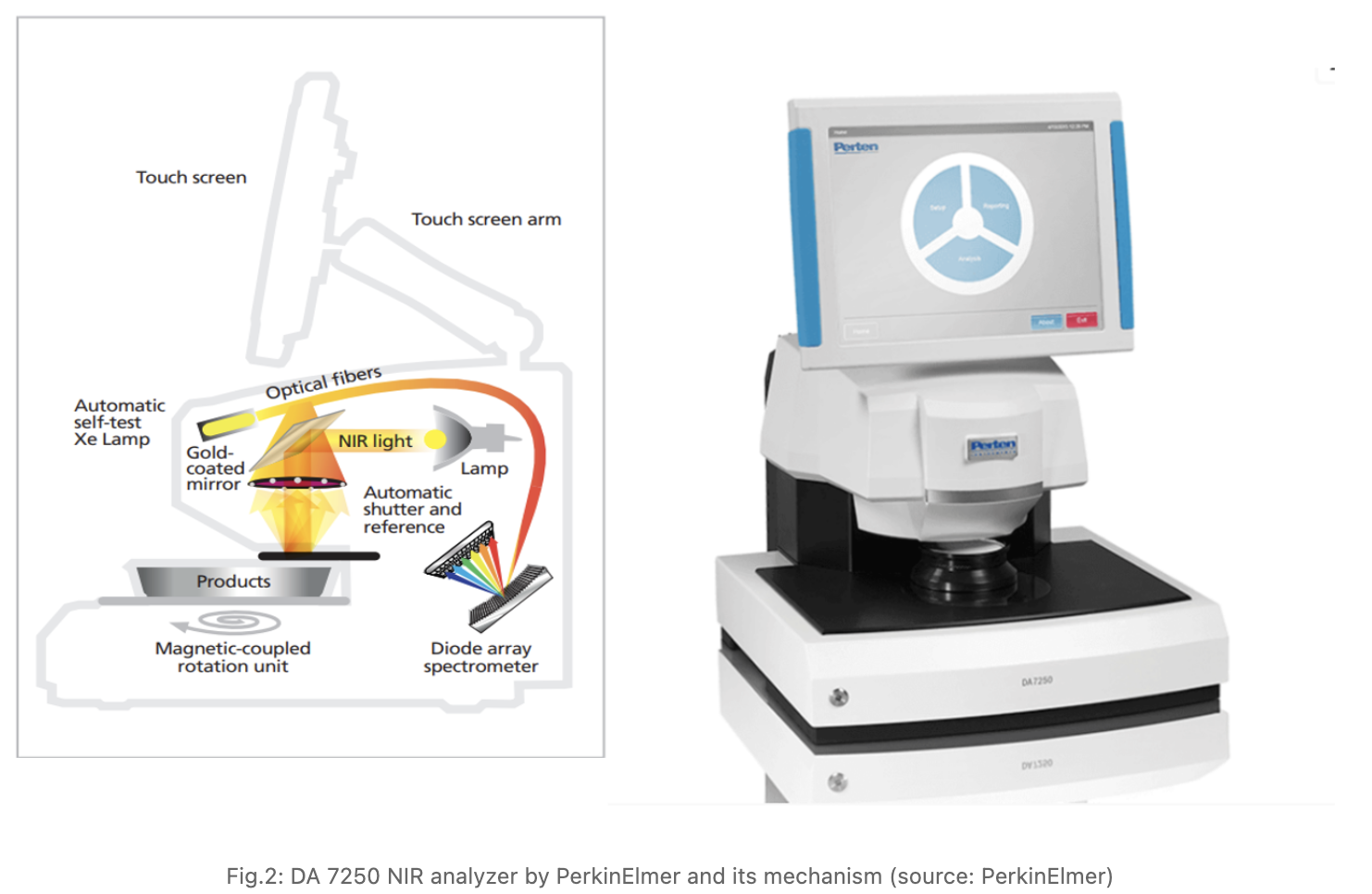
Maize kernel oil content directly impacts extraction efficiency, energy yields, and economics. Conventional methods like Soxhlet extraction are time-consuming, labor-heavy, and sample-destructive (Barrera-Arellano et al., 2019). Near-Infrared (NIR) Spectroscopy addresses these flaws, enabling rapid, non-destructive quantification of oil in kernels, flour, and in-line streams—screening thousands of samples in seconds for quality consistency and maximized DCO recovery (Fassio et al., 2015). Discovered in 1800 by William Herschel as "radiant heat" beyond visible red light, NIR probes 780–2500 nm absorption by molecular vibrations, identifying compounds via multivariate calibration. FT-NIR variants, like those in PerkinElmer's DA 7250™, deliver moisture, protein, fat, starch, and oil results in under 6 seconds with high accuracy (R² up to 0.99).
NIR's Role in Ethanol Production
Raw Material Analysis
Feedstock quality—corn, sugarcane, wheat, or molasses—dictates efficiency. NIR rapidly measures moisture, protein, starch, sugars (sucrose, glucose, etc.), acids, and fiber, allowing precise blending and fermentation optimization to cut waste (Peiris et al., 2020). In corn ethanol, FT-NIR assesses whole kernels via diffuse reflectance, rejecting poor lots affected by weather like frost or mold.
Fermentation Monitoring
This core stage converts sugars to ethanol via yeast. NIR provides real-time data on sugars, ethanol, glycerol, and acids (acetic, lactic), detecting contaminations early. It evaluates enzymes and yeasts, boosting yields and slashing distillation costs (R²=0.9978 for mash ethanol). Metrohm NIRS cuts analysis from 60 minutes (HPLC) to 1 minute per sample.
Distillation and Purity Control
NIR verifies ethanol concentration, impurities, and by-products across distillation, ensuring biofuel specs without reagents. In-line systems like ZEISS Corona® stream data 24/7 post-hammer mill.
Beyond ethanol, NIR transforms agriculture (crop fat/protein; R²=0.93 for seeds), pharmaceuticals (dosage QC), textiles (fiber ID), and chemicals (consistency).
Key Advantages
- Non-destructive for at-line/in-line use.
- Ultra-fast (seconds) with no prep, enabling real-time decisions.
- Multi-parameter (e.g., oil/starch simultaneously), slashing test needs.
- Cost savings via yield gains and regulatory compliance.
Recent advances like CARS-autoencoders enhance maize oil precision across instruments.
Conclusion
NIR spectroscopy is indispensable for ethanol biorefineries, revolutionizing corn oil estimation, process control, and sustainability. As biofuel demand rises, it promises higher efficiency, superior DCO recovery, and greener operations—vital for industry leaders like enzyme innovators driving fermentation advances.
Recent Posts
-1775236236.png)
CO2 Recovery & Monetization in Ethanol Plants
Discover innovative CO2 recovery and monetization strategies for ethanol plants, enhancing sustainability and profitability in the biofuel industry.
GC-FID: A tool for analysis of FAMEs in corn oil
Explore GC-FID, the essential tool for accurate FAME analysis in corn oil. Unlock detailed insights and improve your research outcomes today.
The Role of Enzymes in Maize-to-Ethanol Fermentation
With the rising demand for renewable energy sources and sustainable fuel alternatives, ethanol production has gained significant momentum worldwide. Ethanol, also known as bioethanol, is a biofuel commonly used as a renewable alternative to fossil fuels. One of the most popular feedstocks for ethanol production is maize (corn), primarily due to its high starch content, wide availability, and suitability for large-scale production.
Catalysts Connect
Keep up to date with our latest news and analysis by subscribing to our regular magazine and newsletter
Post a comment
Your email address will not be published.