info@thecatalystsgroup.com


 GET IN TOUCH
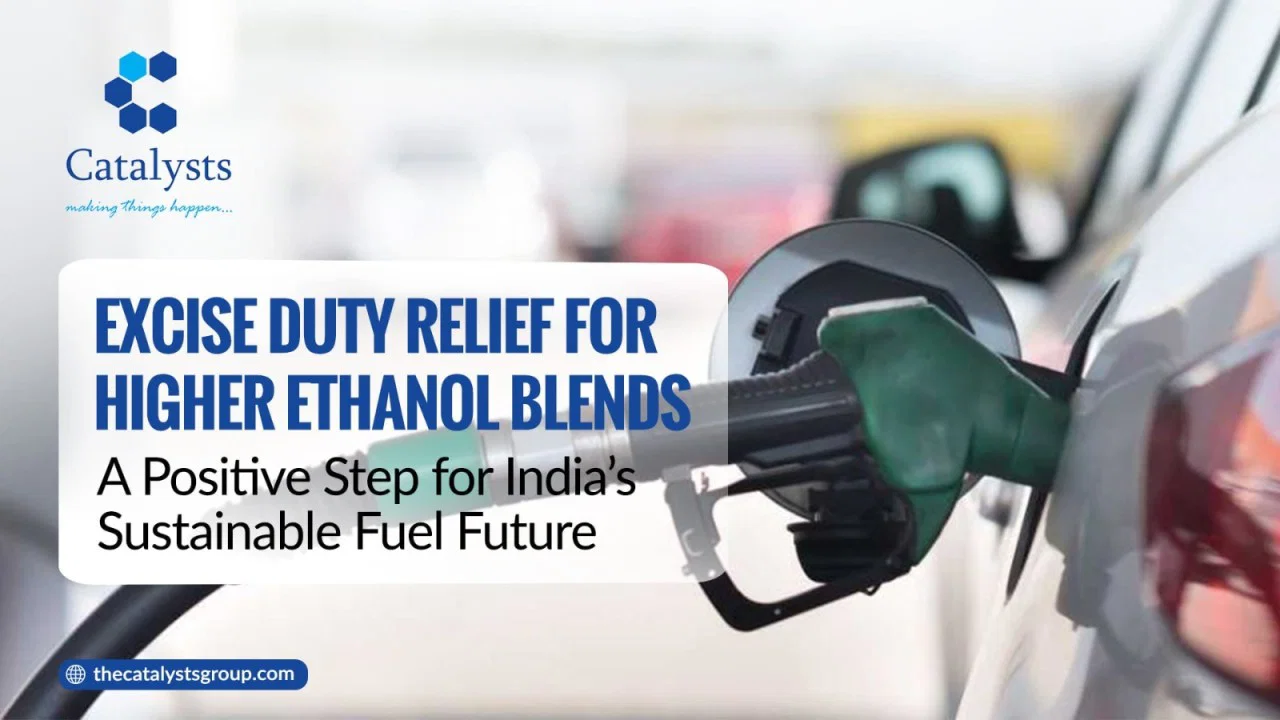
The Government of India has announced a significant policy measure aimed at accelerating the adoption of higher ethanol-blended petrol. Through a recent notification, excise duty exemptions have been extended to ethanol-blended petrol (EBP) variants containing up to 30% ethanol, specifically E22, E25, E27, and E30. This move marks another milestone in India’s ongoing efforts to strengthen energy security, reduce crude oil imports, and promote cleaner transportation fuels.
The exemption applies to the blending activity carried out at fuel depots, which was previously considered a manufacturing process and could potentially attract excise duty. By removing this tax burden, the government aims to eliminate any possibility of double taxation and create a more favorable environment for the expansion of ethanol blending programs.
Why This Matters
India has been steadily increasing ethanol blending in petrol as part of its broader energy transition strategy. Ethanol, produced primarily from agricultural feedstocks such as sugarcane and grain-based raw materials, serves as a renewable alternative to fossil fuels. Higher ethanol blends help lower dependence on imported crude oil while reducing greenhouse gas emissions from the transportation sector.
The latest excise duty relief builds upon existing exemptions already available for lower ethanol blends such as E5, E10, and E20. Extending similar benefits to E22, E25, E27, and E30 sends a clear signal that the government is preparing the ecosystem for future adoption of higher blend fuels.
Benefits for the Fuel and Automotive Ecosystem
The policy offers several potential advantages:
- Reduced Tax Cascading: Eliminating excise duty on the blending process prevents unnecessary taxation and improves operational efficiency.
- Lower Import Dependence: Greater ethanol utilization can help reduce India’s reliance on imported petroleum products.
- Support for Clean Energy Goals: Higher ethanol blends contribute to lower carbon emissions and align with national sustainability objectives.
- Encouragement for Flex-Fuel Vehicles: The move complements ongoing efforts to promote vehicles capable of operating on varying ethanol blend levels.
What It Means for Manufacturers
This development highlights the growing importance of efficient and sustainable ethanol production. As demand for ethanol increases, producers will seek technologies that maximize yield, improve process efficiency, and reduce operational costs.
Catalysts play a critical role across multiple stages of ethanol production, including feedstock conversion, fermentation optimization, purification, and dehydration processes. Advanced catalyst solutions can help ethanol producers achieve higher productivity while meeting stringent quality standards specified by the Bureau of Indian Standards (BIS).
Looking Ahead
While the excise duty exemption does not immediately mandate the rollout of higher ethanol blends across the country, it establishes an important regulatory foundation for future expansion. Industry experts view the measure as a strategic step toward achieving India’s long-term clean energy and fuel diversification goals.
As India continues its journey toward sustainable mobility and energy independence, policies that encourage ethanol adoption will create new opportunities across the biofuel value chain. The producers that can maximize yield, improve fermentation performance, and optimize feedstock utilization will be best positioned to support the next phase of India’s ethanol growth story.