info@thecatalystsgroup.com


 GET IN TOUCH
Coffee fermentation has become an exciting space for experimentation. Producers are exploring different processing methods, fermentation times, temperatures and microbial cultures to create distinctive sensory profiles and increase the value of their coffee. But a successful experiment is only the beginning.
The real challenge is reproducing the same desirable outcome across different batches, harvests and processing conditions. A coffee may deliver exceptional fruity, floral or complex notes during one trial, yet produce a noticeably different cup the next time. Moving from experimentation to repeatability therefore requires greater understanding and control of the fermentation process.
Why Fermentation Outcomes Can Vary
Coffee fermentation is influenced by several interconnected factors: cherry maturity, coffee variety, temperature, fermentation time, pH, processing method, hygiene and the microorganisms naturally present in the environment.
In spontaneous fermentation, the microbial population can vary considerably between batches. This makes the process difficult to predict. Beneficial microorganisms may support the development of desirable sensory characteristics, while uncontrolled microbial activity can contribute to inconsistency or undesirable flavors. Experimentation helps producers discover what is possible. However, without clearly defined conditions, the results can remain difficult to repeat or scale.
The Role of Yeast in Flavor Development
During fermentation, yeast consumes the natural sugars present in the coffee cherry’s mucilage and produces metabolites such as organic acids, alcohols and esters. These compounds can influence the development of flavor and aroma precursors within the coffee. Depending on the yeast strain and fermentation conditions, the process may support fruity, floral, chocolate, caramel, spicy or other distinctive sensory characteristics.
Yeast selection therefore matters. Different strains behave differently and can influence both the progression of fermentation and the resulting cup profile. Using selected yeast provides producers with a more defined starting point. Instead of depending entirely on naturally occurring microorganisms, they can introduce a culture chosen for specific fermentation characteristics and sensory outcomes.
Repeatability Does Not Mean Uniformity
Greater control does not mean making every coffee taste the same. Each coffee still carries the influence of its origin, variety, terroir and processing method. Controlled fermentation helps producers express these characteristics more intentionally while reducing avoidable variation.
Repeatability means understanding which combination of yeast, time, temperature and process conditions delivered the desired result—and establishing a protocol that can produce a comparable outcome again. This is particularly important when moving from a small experimental batch to commercial production. A process must remain practical, measurable and consistent at a larger scale.
Turning Trials into a Reliable Process
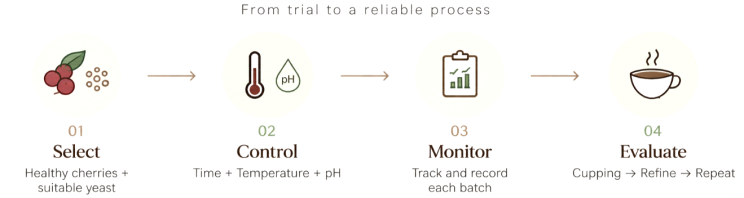
Moving towards repeatability requires more than selecting a fermentation time. Producers need to monitor the variables that influence microbial activity and sensory development. A structured approach may include:
- Selecting suitable, healthy cherries
- Maintaining good hygiene throughout processing
- Choosing the appropriate yeast strain
- Defining the yeast dosage and inoculation method
- Monitoring time, temperature and pH
- Recording each fermentation batch
- Evaluating the final cup through sensory analysis
These records help producers connect fermentation conditions with cup results. Over time, this creates a reliable process rather than a series of isolated experiments.
Bringing Greater Control to Coffee Fermentation
The SafCoffee™ range of selected active dry yeasts helps coffee producers explore distinctive sensory profiles while bringing greater control and consistency to fermentation. Different strains are designed to support different flavor directions, allowing producers to choose a solution aligned with their coffee, process conditions and intended cup profile.
Coffee fermentation will always involve biological complexity. The objective is not to remove that complexity, but to understand and manage it more effectively. Experimentation reveals new flavor possibilities. Repeatability transforms those possibilities into dependable quality and long-term value.
Conclusion
Experimentation can reveal exciting new flavor possibilities, but repeatability is what turns a successful trial into consistent quality and commercial value. By combining selected yeast with clearly defined fermentation conditions and process monitoring, coffee producers can better manage variability while preserving the unique identity of each coffee. With the SafCoffee™ range, producers can explore distinctive flavor and aroma profiles with greater control and consistency.