info@thecatalystsgroup.com


 GET IN TOUCH
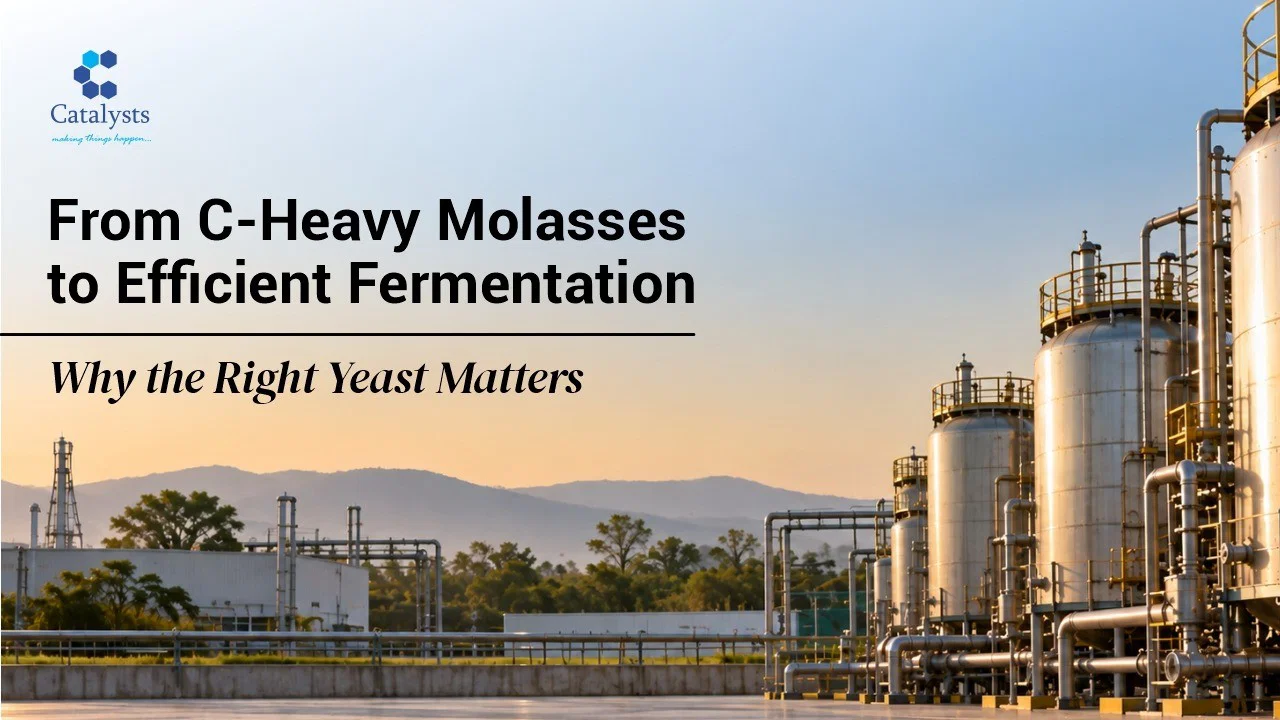
A successful fermentation is not simply about adding yeast to the fermenter; the yeast must establish itself quickly, build a healthy population and remain active throughout the fermentation cycle. The initial condition and viability of the yeast population can influence how effectively fermentation gets underway and how consistently it progresses, particularly as the fermentation environment becomes increasingly demanding. As ethanol concentration rises and other process conditions place stress on the yeast, its ability to tolerate these conditions and maintain activity becomes important for supporting a stable fermentation environment.
The method of yeast preparation and addition also plays a role in process consistency. Conventional yeast propagation and culture-based systems can introduce variability through differences in yeast health, handling and microbiological conditions, while multi-step propagation can create additional opportunities for contamination. A more controlled and consistent yeast input can therefore help reduce these sources of variability while supporting reliable fermentation performance.
What Makes a Yeast Suitable for These Conditions?
For C-heavy molasses fermentation, yeast robustness is important because the organism must perform under a combination of stresses rather than under a single controlled condition. Tolerance to ethanol, temperature, osmotic pressure, volatile acids and sulphites can help yeast maintain its activity as fermentation conditions change. Catalysts-ADY is designed with tolerance to these factors, supporting efficient fermentation under varying process conditions.
But tolerance alone is not enough. The yeast also needs to establish fermentation with a sufficiently strong population. Catalysts-ADY provides a high viable yeast cell count, with approximately 20 × 10⁹ viable cells per gram. This high cell density supports rapid fermentation initiation and stable yeast performance, providing a defined and consistent yeast input to the process. The recommended dosage of approximately 50 ppm on fermenter wash volume, intended to maintain 10–12 million cells/ml, further provides a practical basis for introducing the yeast into the fermentation system. Used with the recommended handling practices, this defined inoculation approach can help plants maintain greater consistency in yeast addition from one fermentation cycle to another.
From Yeast Viability to Process Stability
In an industrial ethanol plant, consistency is as important as the performance achieved in any individual batch. Variations in yeast health or contamination can affect fermentation behaviour, making process control more difficult. This is why maintaining yeast viability throughout fermentation—and controlling how the yeast enters the process—can be an important part of overall fermentation management.
Catalysts-ADY is an active dry Saccharomyces cerevisiae strain designed to provide controlled yeast activity without the need for multi-step propagation. By reducing the handling stages involved in conventional culture-based systems, it can help reduce contamination risks and dependency on skilled microbiological handling. The result is a more straightforward approach to introducing a defined, viable yeast population into fermentation. For plants working with C-heavy molasses, this combination of yeast viability, stress tolerance and controlled yeast management can be particularly relevant when the objective is to achieve stable fermentation performance rather than simply initiate fermentation.
Supporting High-Gravity Fermentation
The way a plant approaches fermentation also has a bearing on overall process efficiency. High-gravity fermentation is one approach that can help ethanol producers work towards higher ethanol concentration and potentially reduce energy requirements. Catalysts-ADY is designed for high-gravity ethanol fermentation and is indicated for ethanol titres of up to 11% v/v with consistent performance. The product material also identifies energy savings through high-gravity fermentation as one of its benefits. For C-heavy molasses-based fermentation, the ability of the yeast to remain active under demanding conditions becomes especially relevant when operating towards higher-gravity fermentation. A robust yeast can help support the process as the fermentation environment becomes progressively more challenging, making yeast selection an important consideration alongside other process parameters.
One Yeast Across Multiple Sugarcane-Based Feedstocks
Feedstock flexibility can also be valuable for ethanol plants, where the available sugarcane-derived feedstock may vary depending on the production cycle and operating requirements. Using a yeast that is applicable across different feedstocks can simplify yeast management and avoid the need to change the yeast solution as the feedstock changes. Catalysts-ADY is applicable in fermentation systems based on cane juice, syrup, B-heavy and C-molasses, providing a single yeast solution across multiple sugarcane-based feedstocks. This flexibility complements its broader fermentation characteristics. Rather than being positioned only for one feedstock, Catalysts-ADY is designed to support high-performance fermentation across sugarcane-based systems, giving plants greater flexibility in how they manage their fermentation process.
Choosing the Right Yeast for C-Heavy Molasses
C-heavy molasses fermentation requires yeast that can do more than convert sugars into ethanol. It needs to establish quickly, maintain viability, tolerate multiple fermentation stresses and continue performing as the fermentation environment changes.
This is where Catalysts-ADY is designed to fit the requirements of the process. Its high viable cell count, tolerance to ethanol, temperature, osmotic pressure, volatile acids and sulphites, combined with its suitability for high-gravity fermentation, provides a yeast solution designed around the demands of sugarcane-based ethanol production. For ethanol producers working with C-heavy molasses, the right yeast can therefore become an important part of building a more stable, consistent and controlled fermentation process—from the initial establishment of fermentation through to the later stages where yeast must continue performing under increasing process stress.