info@thecatalystsgroup.com


 GET IN TOUCH

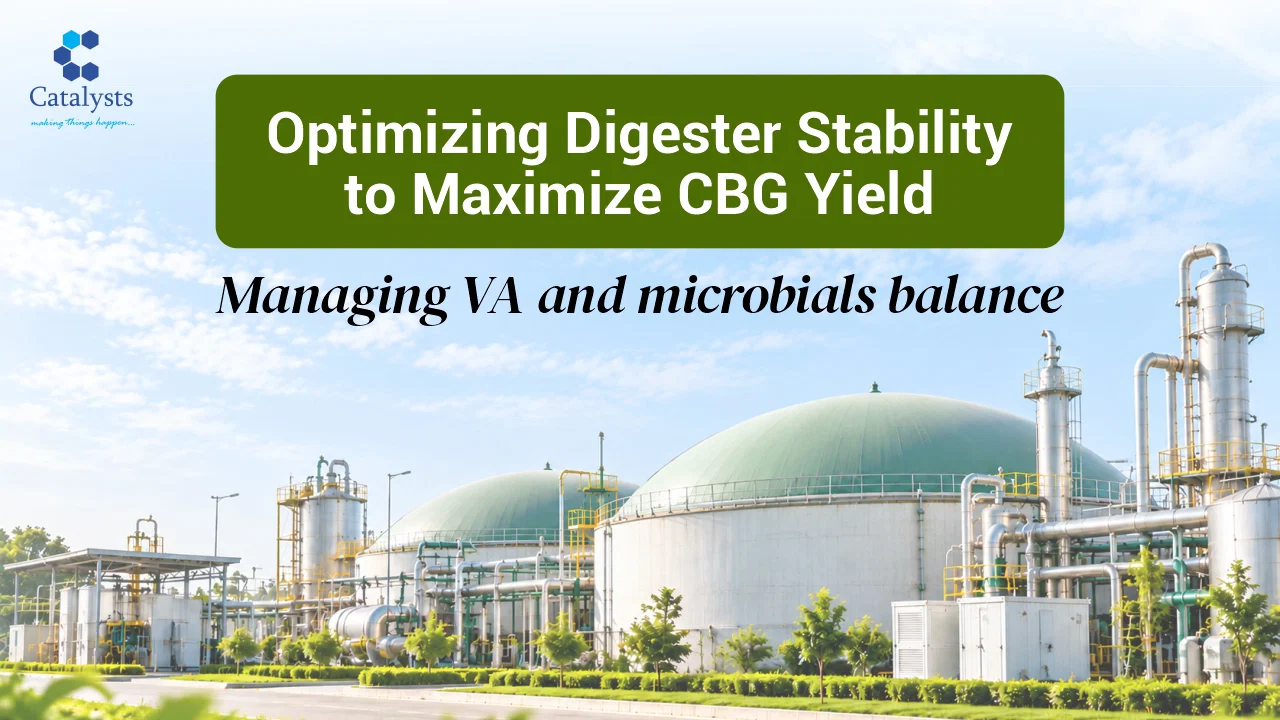
CBG production begins long before biogas reaches the upgrading system. At the heart of the process is an anaerobic digester where a complex microbial community converts organic matter into biogas. When this biological ecosystem remains balanced, the different stages of digestion work together efficiently. But when that balance is disturbed, one of the first warning signs is often the accumulation of volatile acids.
Managing these acids is therefore not simply about controlling a process parameter. It is about maintaining the microbial balance that keeps the pathway from organic feedstock to methane moving in the right direction.
When Acid Production Gets Ahead of the Biology
Anaerobic digestion is a sequence of closely connected biological stages — hydrolysis, acidogenesis, acetogenesis and methanogenesis. Each stage produces intermediates that become substrates for the next.
Volatile acids are naturally produced during the breakdown of organic matter. Under stable conditions, they are continuously converted through the downstream stages of digestion. The problem occurs when acid production becomes faster than the microbial community can consume these intermediates.
As volatile acids accumulate, the methanogenic population can come under increasing stress. Methane formation slows, intermediates begin to build up further and the digester can move toward acidification. This creates a self-reinforcing imbalance: reduced methanogenic activity makes it harder for the system to process the acids that are already present. The result can be reduced biogas productivity, unstable operation and difficulty handling changes in organic loading.
Why Microbial Balance Matters
A healthy digester is not simply a tank containing organic feedstock and microorganisms. It is a functioning microbial ecosystem in which different populations depend on one another. Acid-producing microorganisms generate the compounds that ultimately feed methane-producing microorganisms. The methanogens, in turn, help maintain the conditions that allow the upstream reactions to continue. When one part of this relationship is disrupted, the effects can move through the entire digestion chain.
This is why volatile acid accumulation can be viewed as a symptom of a deeper biological imbalance rather than an isolated problem. Monitoring parameters such as volatile acids, alkalinity, pH and the VA/alkalinity relationship can help indicate whether the digester is maintaining sufficient buffering capacity and microbial stability.
Supporting the Digester When It Comes Under Stress
When a digester becomes biologically stressed, the solution is not always to simply reduce the feed. Lowering the organic load may provide temporary relief, but it does not necessarily address the underlying microbial imbalance. Bioaugmentation offers another approach: supporting the existing microbial ecosystem with beneficial microorganisms that can help strengthen specific biological pathways.
The objective is to improve the community's ability to convert accumulated intermediates and maintain the progression toward methanogenesis. When the microorganisms responsible for consuming volatile acids are better supported, the digester can begin moving away from acid accumulation and toward a more stable operating condition. Research into anaerobic digestion has shown that bioaugmentation can support VFA degradation and recovery in stressed systems, although its effectiveness depends on factors such as microbial compatibility, feedstock characteristics and operating conditions.
Stability Enables Higher Loading
A stable digester also has greater potential to respond to changes in organic loading. Increasing feed without considering microbial capacity can push the system beyond its ability to process the incoming organic matter, resulting in faster VFA accumulation and declining methane production. Conversely, a microbial community that can efficiently process these intermediates provides greater resilience as loading conditions change.
This makes microbial stability particularly important for CBG plants operating with variable or high-strength feedstocks. The goal is not simply to keep the digester running, but to create enough biological resilience to process the available feedstock consistently.
From Digester Stability to Reliable CBG
For a CBG plant, every stage of the process is connected. Unstable digestion can affect biogas generation, while stable microbial conversion creates a stronger foundation for consistent methane production and downstream upgrading. The key is therefore to look beyond individual operating parameters and understand the biology behind them.
Volatile acid accumulation is often a signal. Microbial imbalance is the underlying challenge. Supporting the right microbial activity can help restore the pathway toward stable methanogenesis.
When that balance is maintained, the digester becomes better equipped to handle organic loading, sustain methane generation and support more reliable CBG production. In the end, efficient CBG production is not only about what goes into the digester. It is about maintaining the microbial ecosystem that determines how effectively that feedstock is converted into energy.