info@thecatalystsgroup.com


 GET IN TOUCH

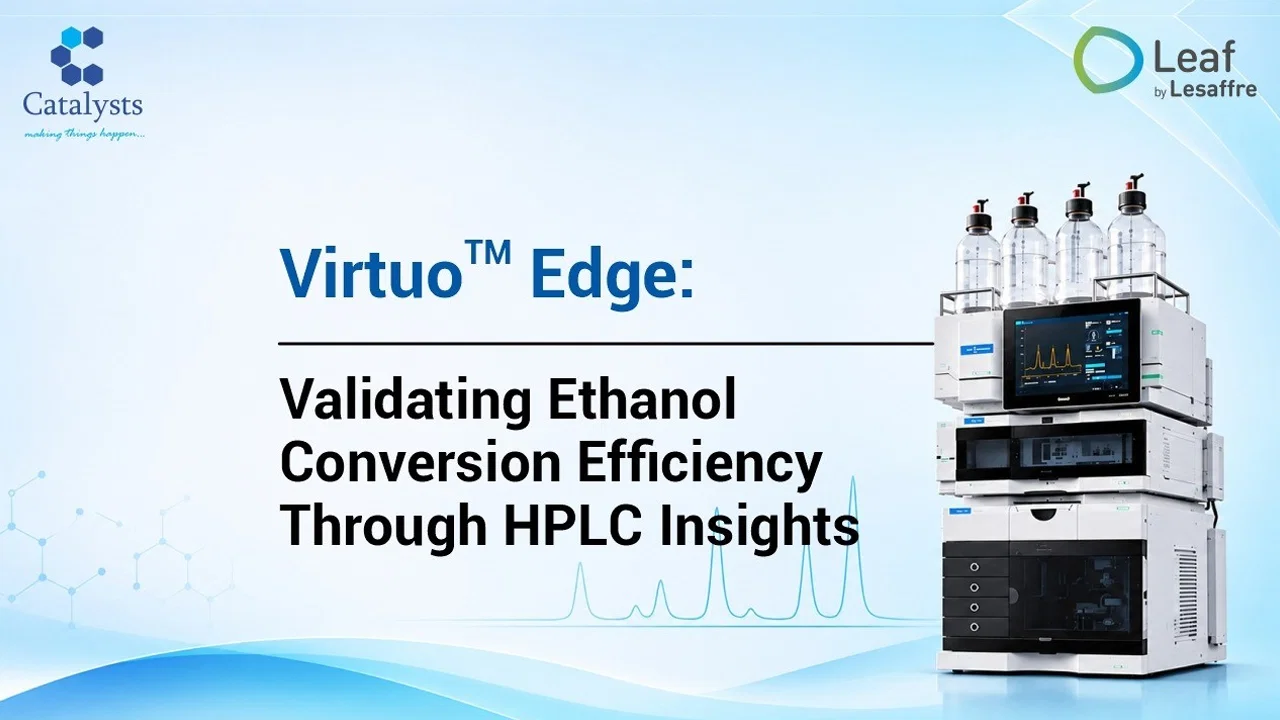
An industrial evaluation highlights changes in fermentation by-products, ethanol conversion efficiency and production cycle time.
Understanding the Challenge
In grain-based ethanol production, fermentation efficiency depends on how effectively yeast converts available sugars into ethanol. However, not all consumed sugar follows the same metabolic pathway. Some carbon is directed towards by-products such as glycerol and organic acids rather than the desired product, while residual fermentable sugars can indicate incomplete substrate utilization. Measuring final alcohol concentration alone may therefore provide an incomplete picture of fermentation performance. Understanding the relationship between ethanol production, residual sugars and by-product formation is essential for evaluating how efficiently the process converts available feedstock. The need for a more precise understanding is critical in industrial conditions, where multiple variations in process and feedstock render evaluations challenging and often unprecise.
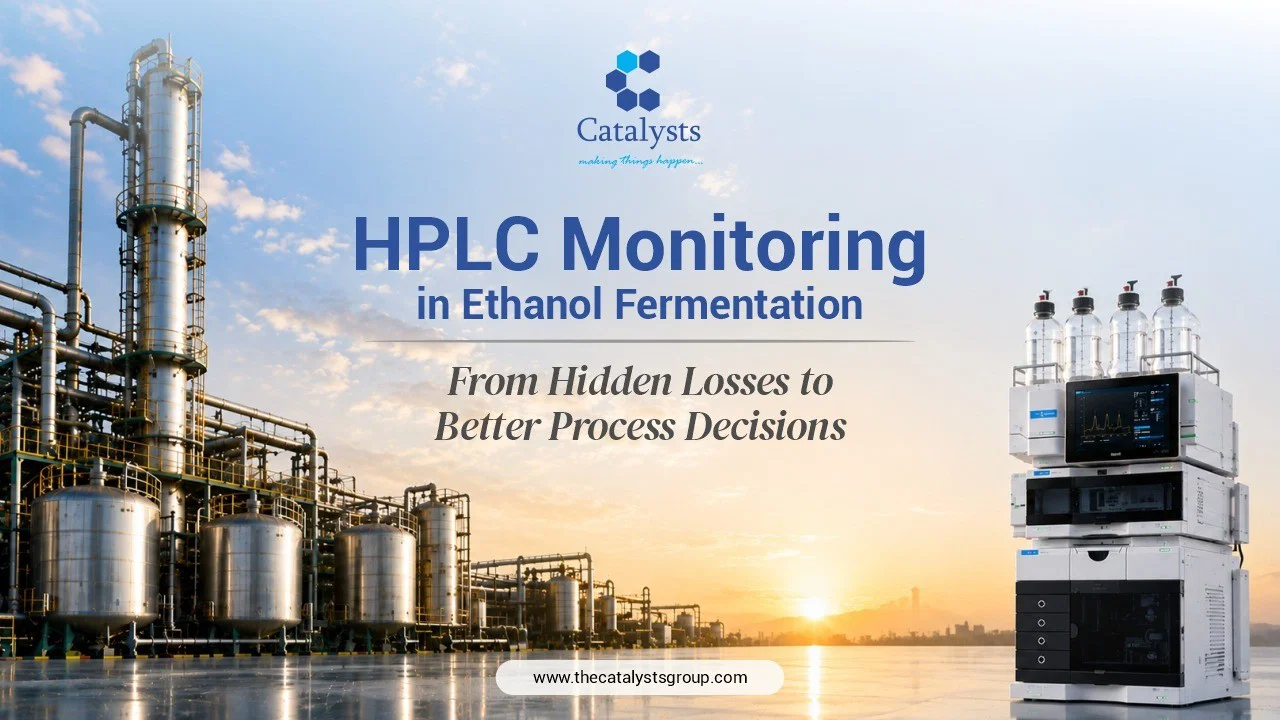
High-performance liquid chromatography (HPLC) provides a detailed analytical view of these parameters, helping identify differences in fermentation profiles and quantify their relationship with overall conversion efficiency. Moreover, the robustness of the technique makes it suitable to precisely describe performance under real industrial conditions.
Evaluating Virtuo™ Edge Through HPLC
Virtuo™ Edge by Leaf by Lesaffre was evaluated against a conventional yeast strain under industrial fermentation conditions. The assessment combined HPLC measurements of ethanol, residual carbohydrate fractions and key fermentation by-products with operational indicators, including ethanol recovery and fermentation cycle time.
This combined approach made it possible to examine not only how quickly fermentation progressed, but also how the resulting fermentation profile differed between the two yeast systems.
HPLC Results: Changes in By-Product Formation
| HPLC Parameter | Conventional Yeast | Virtuo Edge | Change |
|---|---|---|---|
| Lactic acid (% w/v) | 0.613 | 0.517 | 15.7% lower |
| Glycerol (% w/v) | 1.019 | 0.894 | 12.3% lower |
| Acetic acid (% w/v) | 0.049 | 0.051 | 4.1% higher |
| Residual DP1 sugars (% w/v) | 0.078 | 0.036 | 53.8% lower |
| Ethanol conversion efficiency | 88.403% | 89.433% | 1.03 percentage points higher |
The HPLC comparison showed lower concentrations of lactic acid, glycerol and residual simple sugars with VirtuoTM Edge. The reduction in glycerol is relevant because glycerol formation represents an alternative destination for carbon during fermentation. Lower glycerol concentrations, together with reduced lactic acid and residual simple sugars, indicate a change in the measured fermentation profile. The substantial reduction in residual DP1 sugars also suggests more complete utilization of this measured sugar fraction.
The increase in acetic acid was modest, but it is important to retain this observation for an accurate interpretation. The overall findings should be assessed across the full set of parameters rather than assuming that every by-product decreased. Ethanol conversion efficiency increased from 88.403% to 89.433%, representing an improvement of 1.03 percentage points, or approximately 1.16% relative to the conventional yeast baseline.
Faster Fermentation Kinetics and Improved Recovery
The operational comparison showed another important difference: fermentation completion was reported at approximately 40 hours with VirtuoTM Edge, compared with 48–50 hours for the conventional strain. This represents an approximately 8–10-hour reduction in fermentation time.
A shorter fermentation cycle can allow fermenters to return to service sooner, creating an opportunity to improve tank utilization and increase production throughput, provided downstream operations can accommodate the additional flow. The evaluation also reported an ethanol recovery improvement of approximately 9.09 litres per metric tonne in the associated performance analysis. Together, the cycle-time and recovery findings highlight two distinct opportunities: processing batches faster and recovering more ethanol from the feedstock.
Why HPLC Matters to Process Optimization
HPLC helps connect fermentation behaviour with measurable changes in product formation, residual sugars and by-products. Rather than relying on alcohol concentration alone, producers can use these measurements to compare yeast performance, identify trends and evaluate where conversion efficiency may be improved.
In this evaluation, the analytical findings complemented the operational results. Lower glycerol and lactic acid concentrations, reduced residual simple sugars and higher reported conversion efficiency provided a more complete picture of performance, while the acetic acid result demonstrated the importance of examining each parameter individually.
Conclusion
The evaluation of VirtuoTM Edge showed higher reported ethanol conversion efficiency, lower concentrations of several measured fermentation by-products, improved ethanol recovery and faster fermentation completion under the real industrial conditions. By combining HPLC analysis with operational performance indicators, ethanol producers can gain deeper insight into fermentation behaviour and make better-informed decisions about yeast performance and process optimization. The value lies not in a single measurement, but in understanding how changes in the fermentation profile relate to the broader objectives of improved conversion efficiency, feedstock utilization and production throughput.