info@thecatalystsgroup.com


 GET IN TOUCH

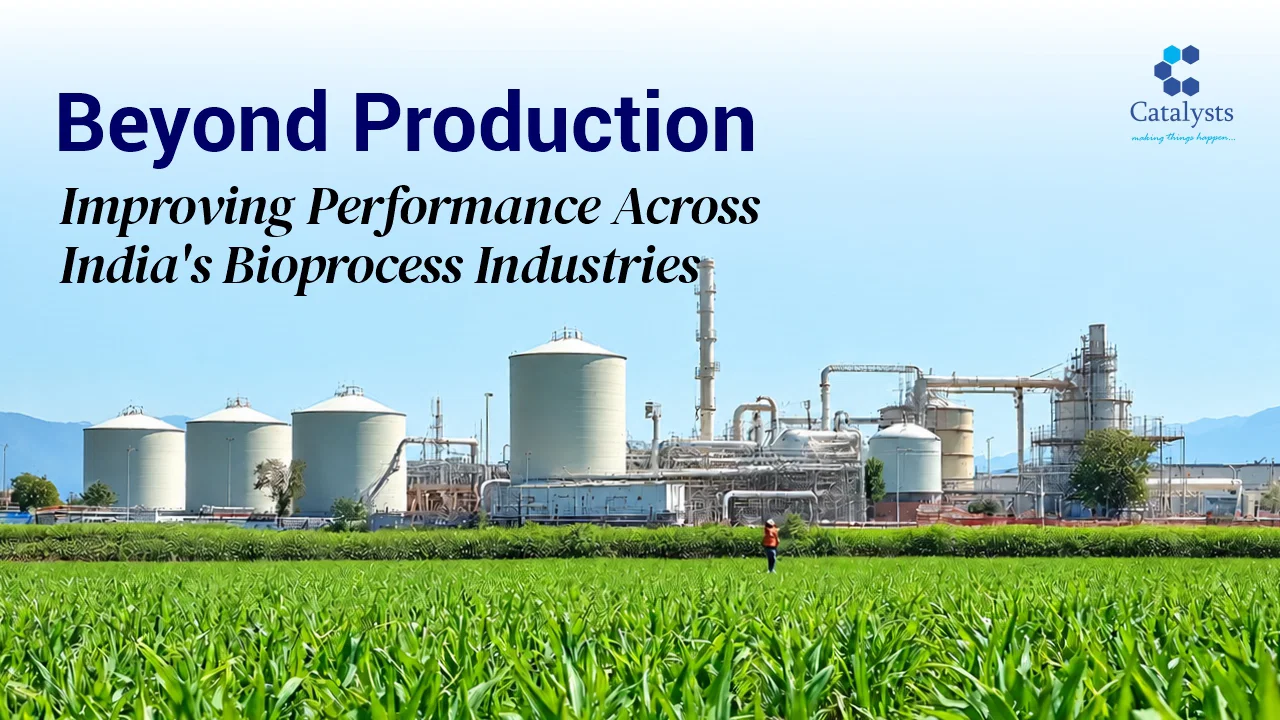
India’s bioprocess industries are entering a phase where growth will depend not only on expanding capacity, but also on improving conversion efficiency, resource utilisation and the value generated from existing operations. The country’s expanding bioeconomy reflects this shift, with biotechnology increasingly contributing to industrial productivity, sustainability and manufacturing performance.
India’s bioeconomy grew from around $10 billion in 2014 to $165.7 billion in 2024 and an estimated $195.3 billion in 2025, with a national ambition of reaching $300 billion by 2030. The opportunity extends beyond pharmaceuticals into fuels, chemicals, agriculture, food ingredients and other industrial applications.
Turning Capacity into Greater Value
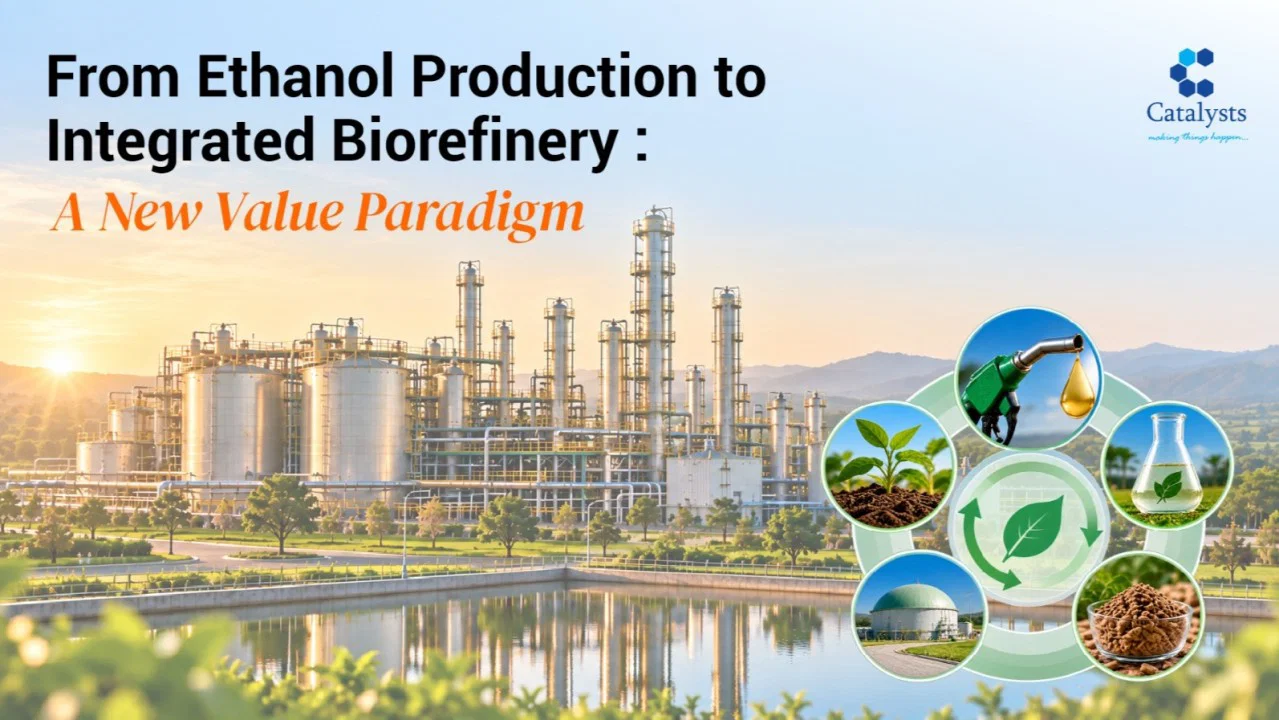
India’s ethanol industry illustrates how rapidly an established sector can evolve. Production capacity increased from 421 crore litres in 2014 to approximately 2,000 crore litres in 2026. By October 2025, capacity had reached 1,953 crore litres, comprising around 980 crore litres from grain-based distilleries and 973 crore litres from molasses and dual-feed distilleries.
Fuel-ethanol production grew at an estimated 37% CAGR between 2020 and 2025, compared with approximately 4% globally. Ethanol blending rose from less than 1.5% in 2013–14 to 20% in 2025–26. Between 2014–15 and 2024–25, sugar mills earned more than ₹1.29 lakh crore from ethanol sales, while the blending programme generated over ₹1.44 lakh crore in foreign-exchange savings through reduced crude-oil dependence.
This expansion has strengthened the connection between agriculture, manufacturing and energy security. However, with E20 established, the next opportunity lies in improving the performance of existing assets. Better feedstock utilisation, conversion efficiency, fermentation control and product recovery can help plants improve output and economics without relying solely on capacity expansion.
Where Process Efficiency Makes a Difference
Industrial biotechnology can support these improvements through enzymes, microbial management and other biological technologies that influence conversion, productivity and consistency.
In grain-based ethanol production, starch must be converted into fermentable sugars before fermentation. Feedstock quality, process conditions and plant configuration therefore influence yield and operating costs. Improvements in conversion and process control can translate into meaningful gains when applied consistently at industrial scale.
Resource efficiency is equally important. CPCB monitoring in 2023 reported freshwater consumption of 4.7 litres per litre of alcohol, compared with 15 litres in 2016–17—a reduction of approximately 66%. Specific spent-wash generation also declined by around 41% over the same period, reflecting improvements in fermentation, distillation, evaporation and condensate recovery.
These developments demonstrate why plant performance must be assessed beyond production volumes. Water consumption, energy use, process losses, recovery rates and by-product utilisation all influence the value generated from each unit of raw material.
Opportunities Across the Industrial Value Chain
The same principles apply across India’s wider bio-based industries. The BioIndustrial segment contributed $90.2 billion, or 46%, of the country’s bioeconomy in 2025 through industrial biotechnology, biofuels, fermented food ingredients, nutraceuticals and other applications.
Compressed Biogas (CBG) is another growing area. By August 2026, India had 217 commissioned CBG plants, with 1,908 plants registered on the national GOBARdhan portal. The CBG blending obligation is set at 3% in FY 2026–27, 4% in FY 2027–28 and 5% from FY 2028–29 onwards for the CNG (Transport) and PNG (Domestic) segments. The recently approved GOBARdhan National Circular Bioenergy Scheme, with an outlay of ₹23,731 crore, aims to drive nearly ten-fold growth in domestic CBG production through offtake arrangements, pricing support, financing and infrastructure.
Meanwhile, India’s BioE3 framework identifies bio-based chemicals, biopolymers, APIs and enzymes among its high-performance biomanufacturing priorities. Across ethanol, CBG, brewing, malt and spirits, the underlying opportunity remains consistent: improve biological conversion while maintaining process stability, product quality and efficient resource use.
From Technology Supply to Measurable Outcomes
Realising these gains requires technologies to be evaluated against the value they deliver, rather than simply their purchase price or dosage. An enzyme or biological solution may create value through improved recovery, reduced losses, better conversion, greater consistency or lower resource consumption.
Achieving these outcomes requires an understanding of each plant’s operating conditions, feedstock variability and process constraints. Technology selection must be supported by economic evaluation, appropriate application and effective implementation.
This is where the right technology partnership becomes important. The Catalyst Group combines technology with process understanding, application expertise and implementation support tailored to individual plant requirements.
The next phase of growth across India’s process industries will be shaped by how effectively existing resources are utilised and technological advances are translated into measurable operational improvements. The objective is not simply to produce more, but to achieve better productivity, greater efficiency and stronger value creation from every stage of the process.