info@thecatalystsgroup.com


 GET IN TOUCH

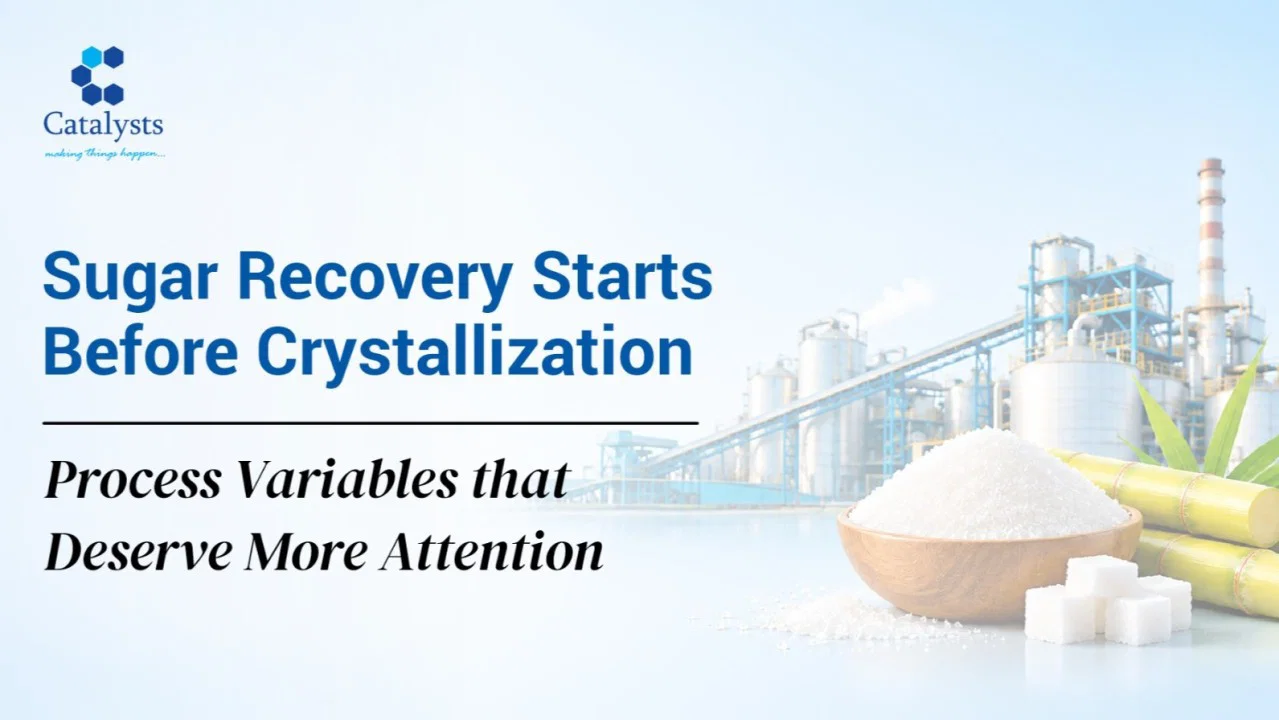
Why upstream juice quality, clarification, evaporation and process control play a critical role in maximizing sugar recovery.
In sugar manufacturing, crystallization is often seen as the stage where sugar recovery is determined. However, the efficiency of crystallization depends heavily on what happens much earlier in the process. The quality of extracted juice, the effectiveness of clarification, evaporation conditions and the composition of the resulting syrup all influence how efficiently sucrose can be recovered.
When these upstream operations are not properly controlled, impurities and sucrose losses can accumulate along the process. Paying closer attention to these variables can help sugar mills improve recovery, maintain product quality and make better use of the sucrose entering the factory.
Juice Quality Sets the Foundation
The quality of juice entering the processing section is influenced by several factors, including cane freshness, cane quality, extraction efficiency and microbial activity. Delays between harvesting and crushing can encourage deterioration, leading to sucrose inversion and the formation of unwanted compounds.
Microbial contamination, particularly from organisms such as Leuconostoc, can contribute to dextran formation. Dextran increases juice viscosity and can interfere with clarification, filtration and subsequent crystallization. The presence of microbial contamination can increase the concentration of reducing sugars and other non-sugars in the juice, thereby affecting juice purity, sugar recovery, and the efficiency of downstream processing operations. Monitoring juice quality parameters such as Brix, pol, purity, reducing sugars and microbial indicators can help identify deterioration or process-related issues early. Addressing these factors at the extraction stage can prevent avoidable complications later in the process.
Clarification: More Than Just Removing Suspended Solids
Clarification plays an important role in removing suspended matter and other impurities from raw juice before it moves to evaporation. Its effectiveness depends on maintaining appropriate operating conditions, including pH, temperature, chemical dosage and retention time. Inadequate clarification can allow impurities to carry forward into the evaporators and syrup. This may contribute to increased turbidity, reduced juice transmittance, and higher ICUMSA colour values, potentially resulting in greater colour formation and difficulties during crystallization.On the other hand, poorly controlled chemical treatment can also affect juice quality and lead to unnecessary process variation. Regular monitoring of parameters such as juice pH, turbidity, colour and settling performance helps operators assess clarification efficiency. Consistent control at this stage supports cleaner juice entering the evaporation section and reduces the impurity load on downstream operations.
Evaporation: Concentrating Juice Without Compromising Quality
Evaporation removes excess water from clarified juice to produce syrup at the required concentration. While achieving the target Brix is important, the way concentration is achieved matters just as much.
Temperature, pressure, residence time and heat-transfer efficiency all influence evaporation performance. Excessive thermal exposure, particularly under unsuitable pH conditions, can contribute to sucrose degradation, inversion and colour formation. Scaling and fouling can further reduce heat-transfer efficiency, increasing energy requirements and affecting plant performance.
Monitoring Brix, temperature, pressure and pH across the evaporation stages helps maintain stable operating conditions. Effective cleaning and scale management are equally important to sustain heat-transfer performance and avoid unnecessary interruptions.
Syrup Purity and Impurity Build-Up
The quality of syrup entering the crystallization section has a direct bearing on the ease of sugar recovery. Apart from sucrose concentration, syrup purity and the nature of its non-sugar components influence viscosity, crystal growth and the amount of sucrose retained in the final molasses. Reducing sugars, salts, colour compounds and other non-sugars can affect the behaviour of the mother liquor and make crystallization more challenging. Higher impurity levels may also influence the separation of crystals from molasses, potentially increasing sucrose losses.
Along with Brix and purity, parameters such as reducing sugars, colour, ash and viscosity can provide useful insight into syrup quality. Tracking these indicators helps identify whether upstream operations are contributing to an increased impurity load.
Crystallization Reflects the Efficiency of Earlier Stages
Crystallization brings together the effects of all the preceding operations. Supersaturation, temperature, circulation and seeding conditions must be managed carefully to encourage consistent crystal growth and efficient sugar separation.
However, even well-controlled crystallization can be limited by poor syrup quality. Excessive impurities and high viscosity can affect crystal growth, increase processing difficulties and influence the amount of sucrose remaining in final molasses. This is why improving recovery cannot depend on crystallization control alone. It requires a process-wide approach that addresses the factors influencing sucrose quality and losses at every stage.
Maximizing sugar recovery requires attention across the entire process, from juice extraction and clarification to evaporation and crystallization. Identifying and controlling the variables that contribute to sucrose losses can help sugar mills improve process efficiency and make better use of the sugar present in the cane. The Catalysts Group works with the sugar industry through its enzyme-based solutions and technical expertise, supporting mills in addressing process challenges and improving overall operational performance.